The flavour in your cup begins before any water touches the grounds. It starts with the bean itself — its variety, where it grew, how it was processed, and when it was roasted.
The two species
Arabica vs Robusta
Two species dominate global coffee production. These aren't just different names — they're fundamentally different plants with distinct characteristics.
A
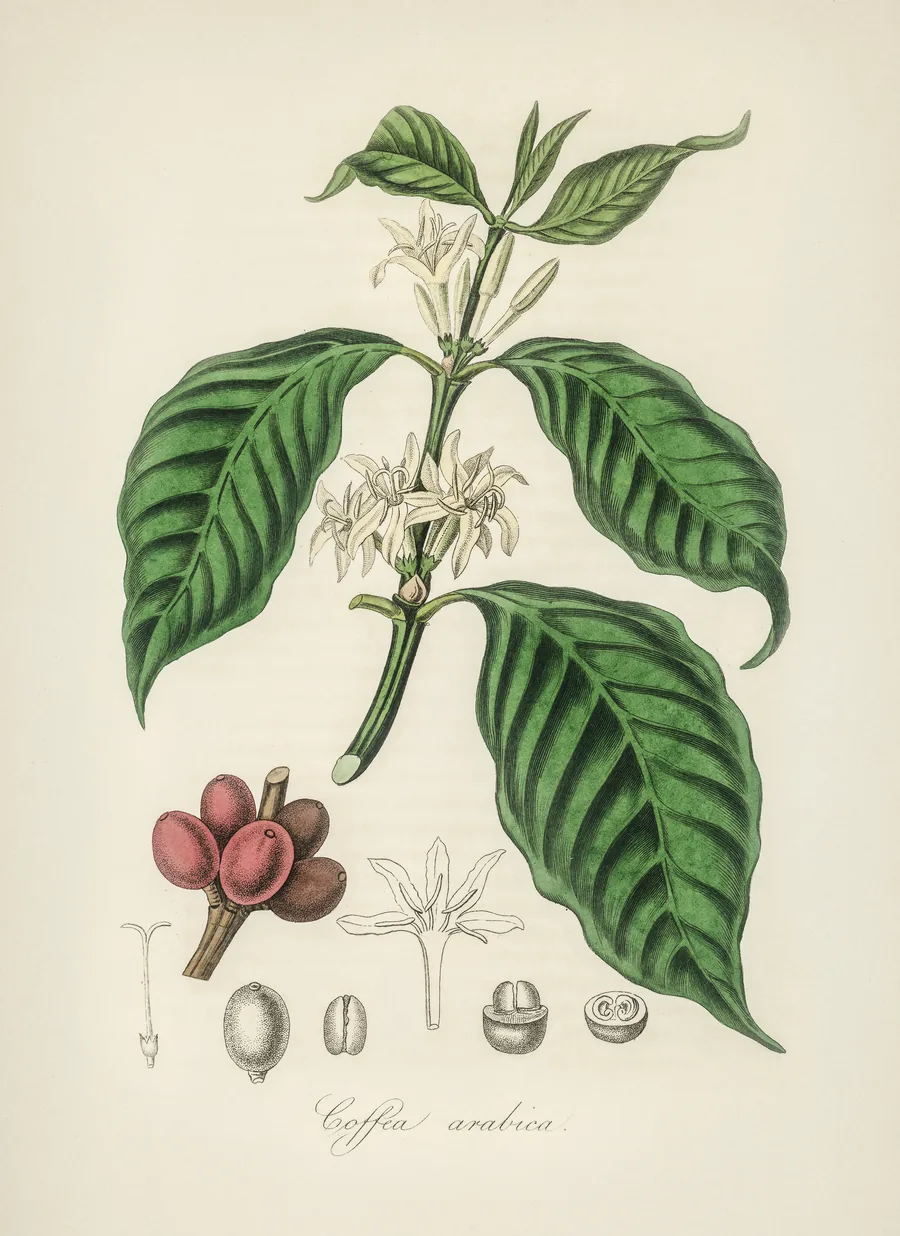
Arabica
Coffea arabica
60%
Arabica accounts for approximately 60% of global production and is prized by specialty coffee enthusiasts worldwide. Arabica beans grow at higher altitudes (1,500–3,000m) in cooler climates, which allows them to develop complex, nuanced flavours.
Taste Profile: Smooth, subtle, and complex. Often fruity, floral, or chocolatey. The acidity is pleasant and contributes to the overall experience.
Caffeine~1.2%
Altitude1,500–3,000m
PriceHigher — more delicate
R
Robusta
Coffea canephora
40%
Robusta represents about 40% of global production. These hardy plants grow at lower altitudes, are more resistant to pests and diseases, and produce higher yields — making them economically important for large-scale production.
Taste Profile: Bolder, more bitter taste with earthy and woody notes. Contains nearly twice the caffeine of Arabica.
Caffeine~2.7%
Altitude0–600m
PriceLower — high yield
From cherry to bean
Processing Methods
Once coffee cherries ripen, they must be processed to extract the green bean inside. The processing method significantly affects the coffee's final flavour.
Washed (Wet) Process
Freshly harvested cherries are run through a pulper that removes the outer fruit. The beans then ferment in water for 12–72 hours, removing the sticky mucilage layer. Finally, they're washed and dried.
Clean · Bright · Acidic
Natural (Dry) Process
Whole coffee cherries are dried in the sun for 2–4 weeks until completely dry, then the dried fruit is removed mechanically. The fruit ferments around the bean, imparting sweetness and body.
Fruity · Sweet · Heavy body
Honey (Pulped Natural)
A middle ground between washed and natural. The outer skin is removed but some sticky mucilage layer remains on the bean during drying. Balances sweetness and clarity.
Sweet · Balanced · Complex
Roast levels
Light, Medium, Dark
Roasting transforms green beans into the brown coffee you recognise. The roast level dramatically affects flavour, body, and acidity.
Light Roast
City Roast
Removed from heat shortly after the "first crack." Retains more of the bean's origin characteristics. Bright acidity, complex notes, more caffeine.
Best for: Pour-over, single-origin appreciation.
Medium Roast
Full City Roast
Reaches the space between first and second crack. Balances origin characteristics with roasted flavours. Caramel and nutty notes.
Best for: Drip coffee, everyday drinking.
Dark Roast
Full City+ / French
Goes past the second crack, where beans release their oils and develop bold, roasted flavours. Lower acidity, full body.
Best for: Espresso, French press, strong coffee lovers.
Altitude & freshness
Two things that shape every bag
Where coffee grows matters
High-altitude beans develop more slowly, allowing sugars and acids to develop fully.
Above 1,800mPremium
Premium coffees with excellent complexity
1,200–1,800mQuality
Quality coffees with good flavour balance
Below 1,200mCommercial
Commercial-grade coffee, often used in blends
Beans have a timeline
Coffee's flavour profile changes significantly throughout its life after roasting.
First 2 weeks
Optimal freshness — flavours are balanced and bright