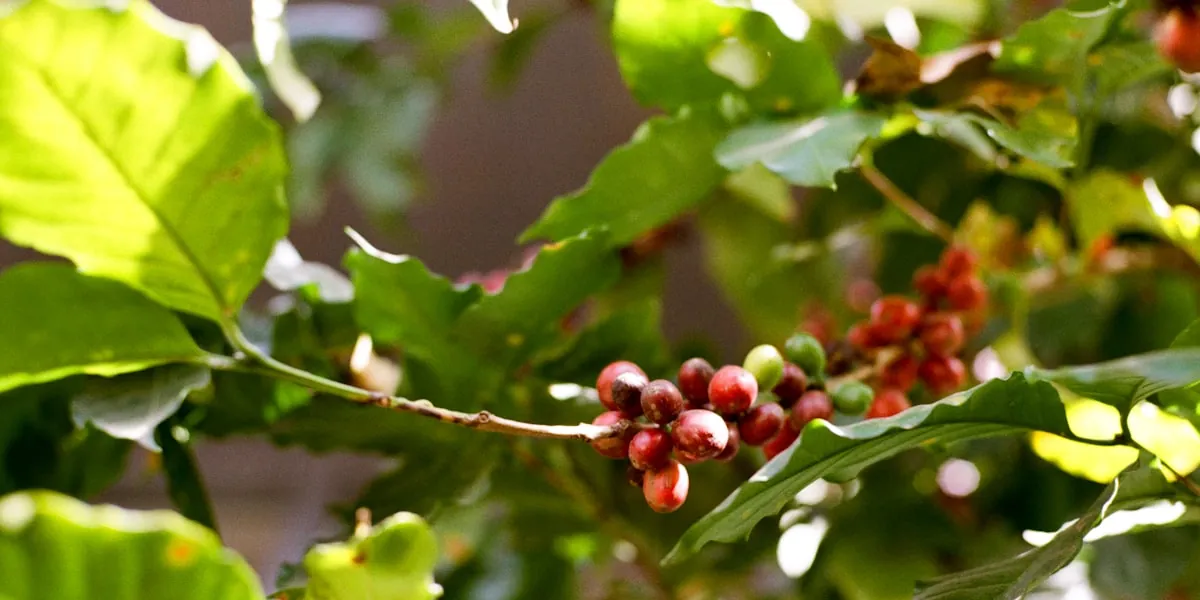
From the lush highlands of Ethiopia to bustling cafés in New York, coffee has traveled an extraordinary journey spanning more than a thousand years — shaping cultures, sparking revolutions, and connecting millions of people across continents.
1,000 years of history
The journey of coffee
850 AD · Ethiopia
The Legend of Kaldi
A goat herder named Kaldi noticed his goats became unusually energetic after eating berries from a certain plant. He shared his discovery with monks at a nearby monastery, who used the berries to stay alert during long nights of prayer. Whether fact or folklore, coffee cultivation originated in Ethiopia — the birthplace of the world's most beloved beverage.
15th–17th Century · Ottoman Empire
The Arab Golden Age
By the 15th century, coffee had become deeply embedded in Arab culture. Coffee houses known as "qahvah" emerged throughout the Ottoman Empire, becoming centres of intellectual discourse — sometimes called "schools of the wise." Arab traders carefully guarded their monopoly on coffee production, making it one of the most valuable commodities in the world.
17th–18th Century · London & Paris
European Discovery
When European merchants arrived in the Middle East, they encountered coffee and were captivated. The beverage spread throughout Europe — first Venice, then London and France. Coffee houses became epicentres of social change. Some historians credit coffee house culture with helping fuel the Age of Enlightenment.
18th–19th Century · The Americas
Colonial Expansion
As European demand soared, colonisers established plantations across their overseas territories. Coffee cultivation spread to the Caribbean, Central America, South America, and Asia. Countries like Brazil, Colombia, and Java became major producers. This expansion came at a profound human cost — many plantations relied on enslaved labour, a dark chapter we must acknowledge.
20th Century · Global
The Modern Era
The 20th century brought mechanisation to coffee production. Instant coffee was invented in 1901, making the beverage accessible to everyday people. Later innovations — espresso machines, drip coffee makers, and automatic brewers — transformed how people consumed coffee. The specialty coffee movement then returned focus to quality, origin, and craftsmanship.
Present Day · Worldwide
Specialty & Beyond
Today's specialty coffee movement represents a return to coffee's roots: a focus on quality, origin, and craftsmanship. Modern enthusiasts, much like their predecessors in Ottoman coffee houses, gather to discuss, taste, and appreciate this remarkable beverage. 2.25 billion cups are drunk every single day across more than 70 countries.
1,000+Years of history
70+Countries growing coffee
2.25BCups drunk every day
60%Global production is Arabica
Etymology
Where the word "coffee" comes from
The drink travelled the world one language at a time, and its name travelled with it — picking up a new shape in every port it passed through.
قهوة · qahwah
The Arabic root. Originally a term used for wine, it was later applied to the dark, stimulating brew that "restrained appetite" and kept scholars alert through the night.
Arabic · 15th century
kahve
As coffee moved north into the Ottoman Empire, the Arabic qahwah became the Turkish kahve — the word that would carry the drink into Europe's trading ports.
Turkish · 16th century
koffie · caffè
Dutch and Italian merchants, among Europe's busiest traders, adapted kahve into forms that fit their own tongues — koffie in Amsterdam, caffè in Venice.
Dutch & Italian · 17th century
coffee
English borrowed the Dutch form, and by the mid-1600s "coffee" had settled into the spelling still used today — one word, shaped by four languages, for one plant from Ethiopia.
English · c. 1600
Turning points
Six moments that shaped coffee
Beyond the broad eras above, a handful of specific, well-documented events quietly redirected the entire course of coffee history.
1475 · Constantinople
Kiva Han opens in the Ottoman capital — widely regarded as the world's first dedicated coffeehouse, and the model every café since has followed in some form.
1616 · Yemen
Dutch traders smuggle live coffee plants out of the port of Mocha, ending the Arab world's centuries-long monopoly on cultivation and opening the door to colonial plantations.
1652 · London
Pasqua Rosée opens England's first coffeehouse in a narrow alley off Cornhill. Within a decade, London has hundreds of them, each a hub for news, gossip, and business.
1732 · Leipzig
Johann Sebastian Bach composes his "Coffee Cantata," a comic piece about a daughter's coffee habit — proof of just how thoroughly the drink had gripped European daily life.
1773 · Boston
The Boston Tea Party turns tea into a symbol of British rule. Coffee becomes the patriotic alternative, and American drinking habits shift permanently in its favour.
1971 · Seattle
Starbucks opens its first store, eventually turning coffee from a cheap diner staple back into a considered, café-going experience — the opening act of the specialty coffee era.